
Hey, I’m Evan
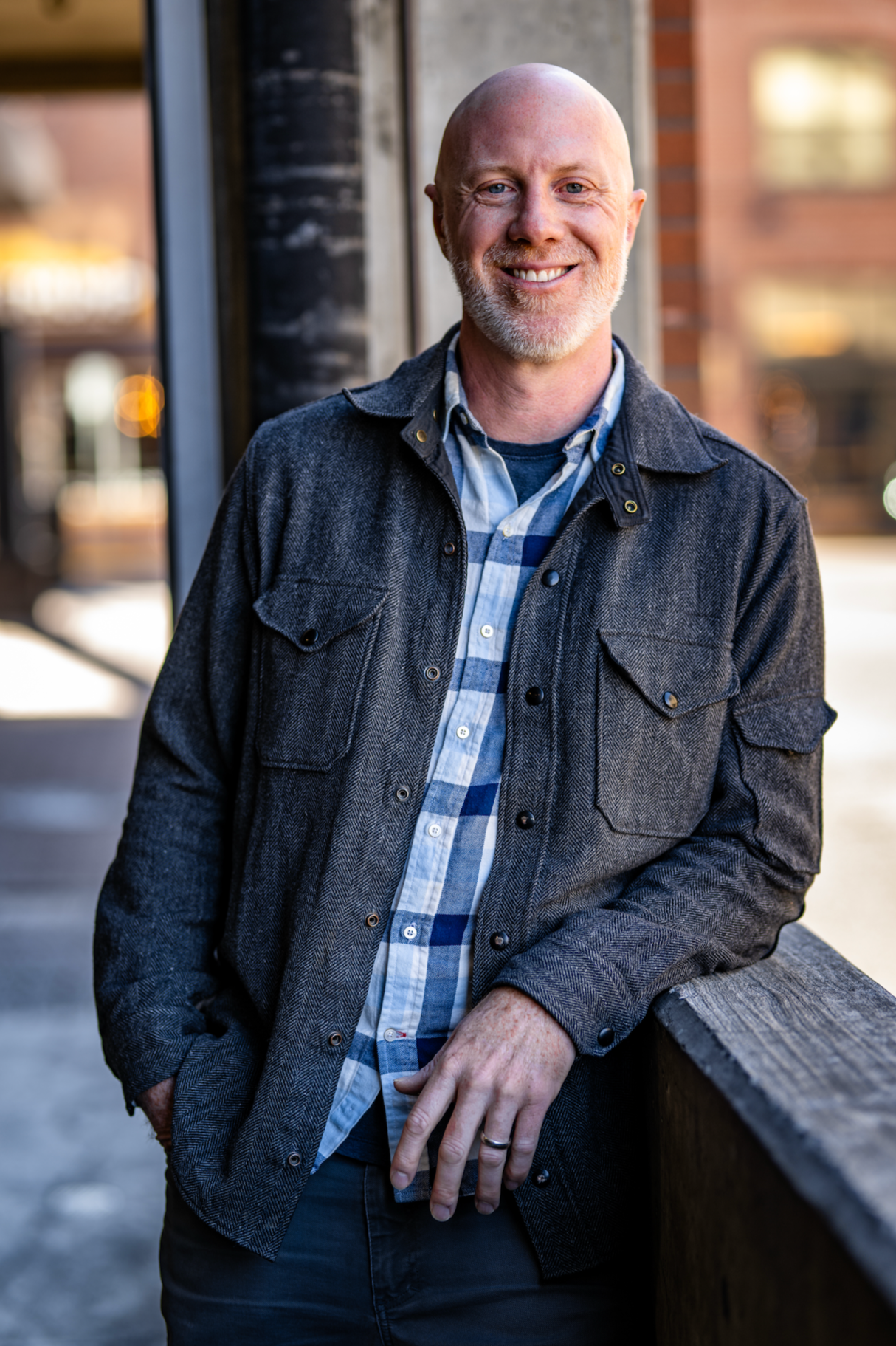
I met Lyndsey at a Super Bowl party in college.
I’d shown up early to meet other people, and from the kitchen I heard someone in the next room yelling at the TV. It was Lyndsey, perched on the edge of the couch as close to the screen as she could get, in a homemade Tom Brady jersey, arguing with the pregame announcers for doubting the Patriots.
I sat down in a papasan chair at the other end of the couch, since I was mostly there for the people and the food. She said hi and went right back to arguing.
She was bold and passionate and didn’t give a shit what anybody thought, and from that moment I made it my mission to get to know her.
We’ve been married 19 years now, and we have a daughter who’s 11 and a son who’s 8.
For most of those years, though, I wasn’t the husband she thought she had. It all started long before we met.
I grew up in a small town in the States where I learned to earn my place by performing. Straight A’s were the bar at school. Church was twice a week, and I memorized scripture to collect badges. I wrestled year-round and never loved it, but I got good enough to wrestle on a college scholarship anyway. What I took from all of it was that love is earned, so I got really good at earning it.
After college, we spent 18 years in the same town. I was a team leader at Whole Foods Market for nine years. Then I spent five years as a pastor, mostly sitting in small groups with men and asking them to be honest about what they were carrying. That’s where I learned to how to stay in the room when I couldn’t fix anything.
From there I went into social work. I spearheaded an outreach project to connect with people living on the streets who were fighting addiction and mental illness. It humbled me, because I came to see that the only thing separating me from them was where I was born and what I was handed. It also broke apart the conservative evangelical faith I’d held my whole life. I’ve since left Christianity, and my spirituality is a lot wider and more curious than it used to be.
By the end of my time in social work, I was at the top of my game. I was directing two facilities, planning a third with the city, managing a team of 50 and working closely with more than 80 local service providers. From the outside, I had it all together, and people counted on me. What nobody knew, Lyndsey included, was that I’d been hooked on pornography since I was 11 and had hidden it from her for our entire relationship. I lied every day to keep it that way.
The crack came from a friend named Cash. Over coffee one day, he asked me, “If you could tell me anything right now, what would you want me to know?” It wasn’t the question that got me. It was the presence of the man sitting across from me. For a year and a half he’d shown me he could sit with other people’s hardest stuff and not flinch, and that day, looking across the table at him, everything I’d been holding started pushing its way to the surface.
He wasn’t the only one. Through my job, I’d gotten to know men in the recovery community, most of them older than me, who had been through real pain and learned to sit with what they couldn’t fix. Being around men like that is what finally got me to say yes to working on myself. I started with Internal Family Systems, or IFS, and it gave me a way to get curious about the parts of me that had been running the show instead of fighting them: the part that went quiet, the part that got defensive, the part that hid. Every one of them was trying to protect me. The closer I got to the pain and fear underneath them, the less I could keep hiding, and that’s what finally gave me the courage to tell Lyndsey.
Sharing the truth with Lyndsey was the hardest decision of my life. The addiction hurt her, but what wrecked her was that I’d kept it from her for 18 years. She told me she’d spent half of her life with me and had no idea who I really was.
We didn’t separate, but we probably should have. I stayed in the house, and for the next year we lived in two different worlds. I kept working on myself and wrote her letters every day trying to win her back. None of it worked, because I was still doing what I’d always done — performing and trying to manage how she saw me.
But I kept engaging the work, and slowly I changed. I learned to catch what was going on in my body before it took over: a tight chest, heat in my face, the pull to shut down or fire back. Those signals had always been there, but I’d learned to ignore them early on. Once I could sense them coming, I could choose what to do next. For the first time, I stopped performing and started actually showing up, for myself, for Lyndsey and for our kids.
By that point we were both worn out. My social work and her years of teaching middle school had emptied us, so we took our kids and traveled for a year and a half. Early in that trip, a couple of things back home shook us, and we let ourselves imagine living somewhere new. When Lyndsey was ready to build again, she told me, “I don’t want a new chapter. I want a whole new fucking book.”
So we each wrote down our values and ranked them together, honestly. Every bit of research pointed to the west coast of the Netherlands, and in March 2026 we moved to Leiden without ever having set foot in the city.
We never hid what we were going through from our kids. They knew we were sad, that we were grieving, and that we were working hard to rebuild trust. Kids are scared of what they don’t know, not what they do, so it’s a normal part of conversation in our house. They ask us how we’re doing, and we tell them.
My daughter is an artist with a silly mind for making up stories, and she reads everything she can get her hands on. At 11, she still climbs into my lap to snuggle and I love it. My son is a goofball who loves riddles, board games, soccer, and he has the gentlest heart for animals, especially cats.
Lyndsey and I are building a full life here, with friends of our own and friends we share. The things we look forward to now are small: walking through the market holding hands, sitting on the park bench near our house doing a crossword, wandering a museum with the kids. The little things that used to drive us crazy about each other are the things we laugh about, and holding hands is exciting again.
The grief is still there, but it doesn’t run us anymore. We talk about it, and we let each other be sad when we need to. And, when we sit down on the couch, she moves toward me instead of staying a cushion away.
I’ve been coaching professionally for three years, though I’ve been doing some version of it most of my adult life. I’m a certified Self-Leadership Coach, I’m IFS-informed, and I’m currently learning schema therapy and Relational Life Therapy.
The men I work with aren’t broken. Most of them were taught to ignore what’s happening in their bodies, so their impulses make the call. Some go quiet and some blow up. In our sessions, you bring whatever’s happening right now, at work, at home, or anywhere in between. Together we catch the impulse moving through your body in that moment, find the words for it, and practice saying it out loud in a way that brings her closer instead of pushing her away.
The first thing most men notice is how much is going on inside them that they never felt before. Once they notice it, they have a choice they didn’t have before.
I work online, in English, with men across the Netherlands. If you see yourself in any of this, book a 45-minute call, or start with these 12 questions.